
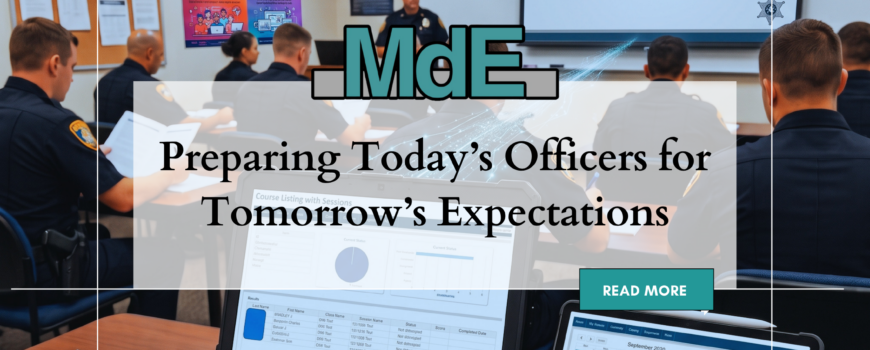
At 2 a.m., the job can change in an instant. A call that begins as a routine response can become a crisis. A routine traffic stop can require communication, de-escalation, technology, and sound judgment all at once. A dispatcher may be the first person to speak with someone experiencing a mental health crisis. A firefighter […]

Training has always been about more than checking a box. Every certification earned, every scenario completed, and every exam passed is supposed to answer one important question: Is this person truly prepared for what comes next? Too often, however, testing becomes little more than a finish line. Officers complete an exam, receive a score, sign[…..]

“We’ve always done it this way.” It’s a phrase heard in public safety agencies across the country. Sometimes it’s spoken with pride, reflecting years of experience and proven processes. Other times, it’s simply a practical acknowledgment that when budgets are tight and staffing is limited, you work with what you have. For many departments, “what[…..]

At 2:17 a.m., Officer Daniels was the only patrol unit on duty. The call came in from dispatch just after the rain started. A vehicle had slid into a ditch outside town limits, and the driver was injured. Daniels responded alone, juggling traffic control, medical assistance, and coordinating with the volunteer fire department that was[…..]

No one gets into public safety hoping to deal with Internal Affairs. For many, the very mention of IA brings tension. It’s often associated with worst-case scenarios—complaints, investigations, discipline, and careers hanging in the balance. Even for those who have never been involved in an investigation, there’s an underlying sense of unease. A quiet thought:[…..]

Predicting the future is always risky, but some trends in public safety are clear enough that we can make educated guesses about where we’re headed. Five years from now—2031—the landscape of public safety work will look different in important ways, driven by technological advancement, evolving community expectations, and the accumulated weight of lessons learned in[…..]
When public safety agencies talk about retention challenges, the conversation usually centers on the big issues: competitive pay, demanding schedules, physical risks, and emotional toll. These are real factors, and they matter enormously. But there’s another factor that rarely makes the list, despite having a significant impact on whether personnel stay or go: how well[…..]

There’s a persistent fear around the word “automation” in public safety circles. Mention implementing automated systems for training records, compliance tracking, or asset management, and you’ll often hear concerns about technology replacing the human judgment that’s essential to the work. But here’s the truth that gets lost in these conversations: automation in public safety isn’t[…..]

Every vehicle in a department’s fleet tells a story. From the patrol car that responds to hundreds of calls a month, to the unmarked vehicle used for investigations, each plays a critical role in keeping communities safe. But with every story comes a stack of details—maintenance records, mileage logs, fuel reports, and equipment tracking. Managing[…..]

As Thanksgiving approaches, gratitude takes center stage. Families gather around tables to share meals and memories, reflecting on what—and who—they’re thankful for. In public safety, gratitude often goes to those on the front lines: the officers, dispatchers, firefighters, and EMTs whose courage keeps our communities safe. Behind every badge, there’s another group quietly keeping things[…..]
