
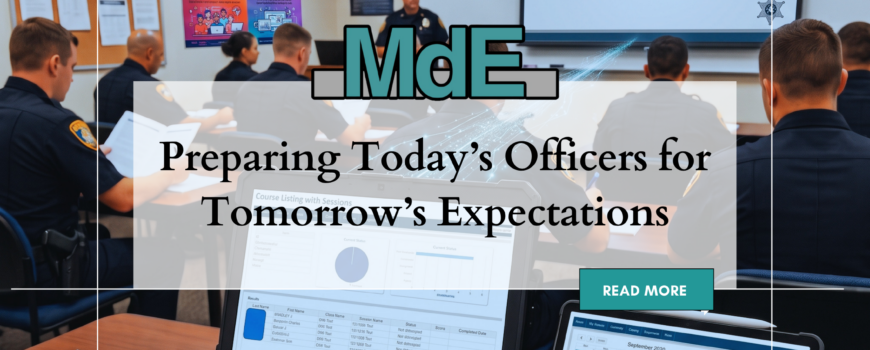
At 2 a.m., the job can change in an instant. A call that begins as a routine response can become a crisis. A routine traffic stop can require communication, de-escalation, technology, and sound judgment all at once. A dispatcher may be the first person to speak with someone experiencing a mental health crisis. A firefighter […]
There was a time when everyone knew who to call. If someone needed to know why a particular policy was written the way it was, they knew. If a training requirement seemed confusing, there was someone who remembered when it was implemented and why. If a piece of equipment had a history that wasn’t obvious[…..]

No supervisor wants to receive the call. A complaint has been filed. Whether it’s a citizen concern, an internal report, or a policy question, everyone involved immediately understands that the next steps matter just as much as the incident itself. The facts need to be gathered. Documentation needs to be reviewed. Policies must be followed.[…..]

Training has always been about more than checking a box. Every certification earned, every scenario completed, and every exam passed is supposed to answer one important question: Is this person truly prepared for what comes next? Too often, however, testing becomes little more than a finish line. Officers complete an exam, receive a score, sign[…..]

There was a time when every public safety office had at least one filing cabinet everyone depended on. You know the one. The top drawer held personnel files. The second drawer was packed with training records. Somewhere near the bottom were equipment inventories, policy acknowledgments, inspection reports, and years of handwritten notes that only one[…..]

“We’ve always done it this way.” It’s a phrase heard in public safety agencies across the country. Sometimes it’s spoken with pride, reflecting years of experience and proven processes. Other times, it’s simply a practical acknowledgment that when budgets are tight and staffing is limited, you work with what you have. For many departments, “what[…..]

At 2:17 a.m., Officer Daniels was the only patrol unit on duty. The call came in from dispatch just after the rain started. A vehicle had slid into a ditch outside town limits, and the driver was injured. Daniels responded alone, juggling traffic control, medical assistance, and coordinating with the volunteer fire department that was[…..]

The lieutenant stood at the front of the briefing room holding three different reports that didn’t quite match. One showed training compliance numbers. Another listed staffing shortages. A third outlined equipment concerns tied to overtime and delayed maintenance. Individually, each report told part of the story. Together, they painted a picture of a department stretched[…..]
Dear Data Doctor, I’ve been in this job for over a decade. I used to love it. Lately, though, I’m exhausted—and it’s not just from the calls. It’s everything else. The paperwork, the constant follow-ups, trying to keep track of training, certifications, reports… it feels like it never ends. I stay late just to catch[…..]

No one gets into public safety hoping to deal with Internal Affairs. For many, the very mention of IA brings tension. It’s often associated with worst-case scenarios—complaints, investigations, discipline, and careers hanging in the balance. Even for those who have never been involved in an investigation, there’s an underlying sense of unease. A quiet thought:[…..]
